

Upside-Down Rhubarb Cake
Gluten-Free • Grain-Free • Paleo-friendly • Dairy-free option
Makes 12 squares
If there is one thing I will never say no to, it's stewed rhubarb. Seriously, I would do just about anything for it. There's something about that sweet, tangy flavour that I absolutely adore, and although rhubarb is technically a vegetable, I think it deserves far more attention in the baking world!
The tricky thing about rhubarb is that it can be seriously sour on its own. The secret is finding that sweet spot where you soften the sharpness without losing the gorgeous, tangy flavour that makes it so delicious in the first place.
Enter this Paleo Upside-Down Rhubarb Cake. Think soft, fluffy almond flour cake topped with tender, sweet-and-tangy rhubarb that transforms into the prettiest little upside-down bake. It's beautifully moist, lightly sweetened and has the most divine texture.
It's the kind of cake that feels equally at home alongside an afternoon tea, served up with a little custard for dessert, or enjoyed straight from the fridge when you're wandering into the kitchen looking for something sweet.
And the best part? It's incredibly simple to make, uses everyday ingredients and is naturally gluten-free and grain-free, with easy swaps to make it dairy-free, too.
NOM.
Why you'll love this Paleo Upside-Down Rhubarb Cake
Besides the obvious...
A gorgeous balance of sweet and tangy rhubarb.
Soft, fluffy and tender almond flour cake.
Naturally gluten-free and grain-free.
Easily made dairy-free with a couple of simple swaps.
Made with simple pantry ingredients and fresh rhubarb.
Perfect for spring baking when rhubarb is in season.
Delicious served warm with custard, yoghurt or a little cream.
A few notes before you start
A couple of little things make all the difference with this recipe.
First, pack your rhubarb tightly together. This is the key to getting that lovely upside-down finish. You want the rhubarb arranged in a single layer with as few gaps as possible, so the cake batter doesn't seep through and disrupt your topping.
Secondly, don't be tempted to rush the baking time. Almond flour cakes stay lovely and moist, but you still want the centre to be properly cooked through. Start checking around the 35-minute mark, and give it a little longer if needed. A knife inserted into the centre should come out clean rather than covered in wet batter.
And finally, let the cake rest before flipping it over. Give it around 10 minutes in the dish before turning it out onto a plate or cutting board. This helps the cake settle and makes it easier to remove without breaking apart. I know it's tempting to get straight in there, but trust me on this one!
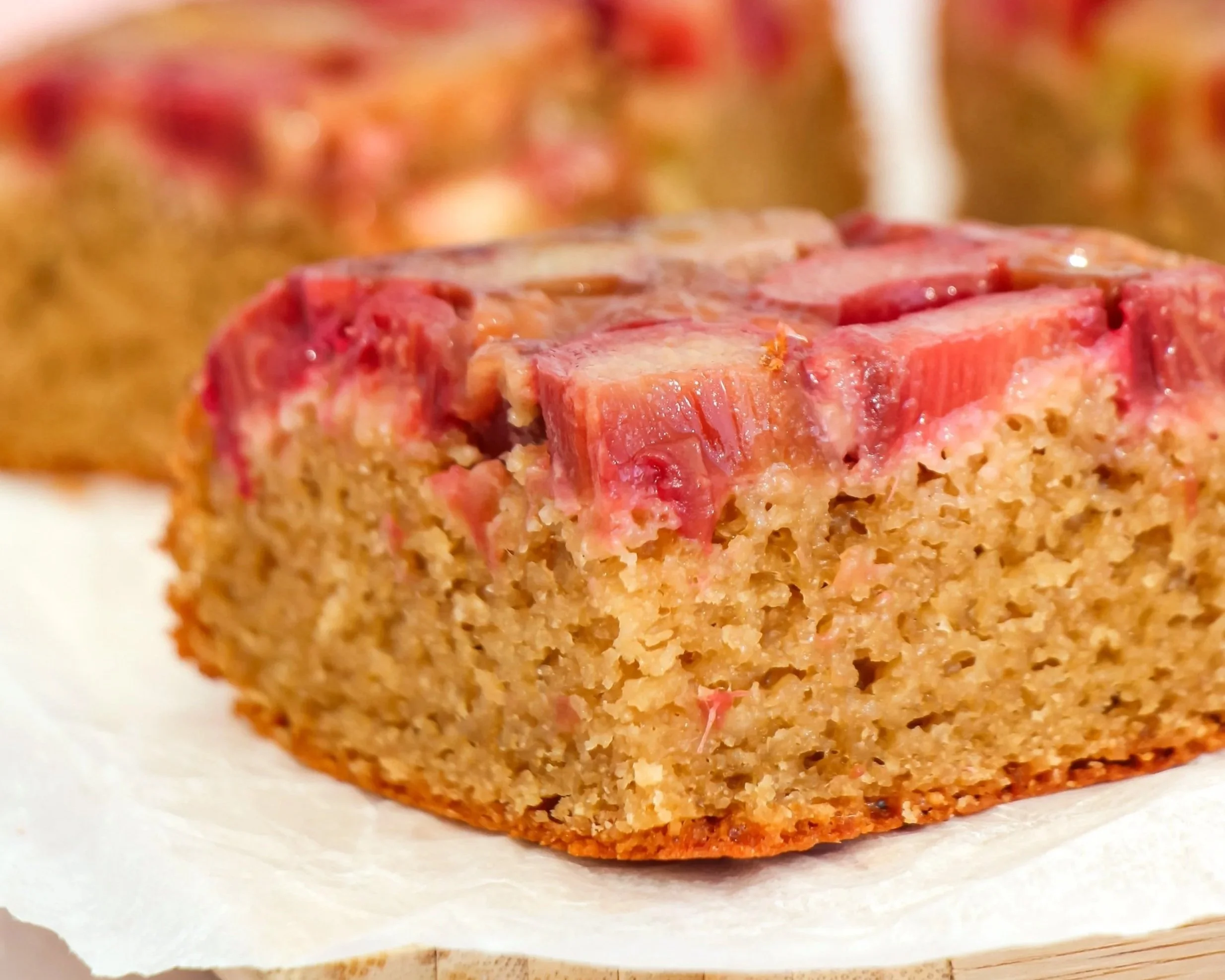
This cake came about because I wanted to make the most of one of my favourite ingredients: rhubarb! The combination of tangy rhubarb and a soft, lightly sweet almond flour cake is just divine, and the upside-down finish makes it look far more impressive than the effort required. It's a recipe I'll be making again and again, as long as there's rhubarb in the garden!
GLUTEN-FREE RHUBARB CAKE
Ingredients
Rhubarb topping
310 g rhubarb stalks (approximately 3 stalks, around 30 cm long), cut into small cubes
1½ tbsp coconut sugar or granulated sugar
1½ tsp tapioca flour or cornstarch
1 tbsp melted butter, coconut oil or ghee
Cake
2 eggs, at room temperature
¼ cup maple syrup or honey
¼ cup melted butter or ghee, cooled slightly (or coconut oil)
⅓ cup unsweetened yoghurt of choice, including dairy-free yoghurt
¼ cup coconut sugar or granulated sugar
1½ cups almond flour or ground almonds
½ cup tapioca flour
1 tsp baking powder
½ tsp baking soda
Ingredient Notes
Rhubarb
Fresh rhubarb is the star of this recipe! Its natural tartness balances the sweetness of the cake beautifully. The amount you need may vary slightly depending on the size of your baking dish and how tightly you arrange the pieces.
Coconut sugar
I love using coconut sugar, but regular granulated sugar works just as well. Use whichever you have in the pantry.
Maple syrup or honey
Both work beautifully to sweeten the cake batter. Choose whichever you prefer or have on hand.
Almond flour
This gives the cake its soft, tender texture and lovely flavour. Finely ground almond flour is ideal, but ground almonds work well too. The texture may vary slightly depending on how finely they're ground.
Tapioca flour
Tapioca flour helps give the cake structure and a lovely texture without the need for conventional wheat flour. For the rhubarb topping, you can substitute cornstarch to help absorb some of the juices released during baking.
Yoghurt
Use your favourite unsweetened yoghurt, whether dairy-based or dairy-free. It adds moisture and helps keep the cake tender.
Butter, ghee or coconut oil
All three work well in this recipe. Coconut oil is a great option if you want to make the cake dairy-free, particularly when paired with a dairy-free yoghurt.
Eggs
Eggs help bind the cake together and give it structure. I recommend using room-temperature eggs, so they combine easily with the other ingredients.
How to Make My Paleo Upside-Down Rhubarb Cake
Preheat your oven to 170°C and line a 26 x 18 cm baking dish with baking paper, making sure the bottom and corners are covered.
Cut the rhubarb into small cubes, approximately 1.5 cm wide. Add to a large bowl with the coconut sugar, tapioca flour and melted butter, coconut oil or ghee. Toss gently until the rhubarb is evenly coated, then set aside.
In a large bowl, whisk together the eggs, maple syrup or honey, melted butter or ghee, yoghurt and coconut sugar until well combined.
In a separate bowl, mix the almond flour, tapioca flour, baking powder and baking soda.
Add the dry ingredients to the wet ingredients and mix until you have a smooth batter.
Arrange the prepared rhubarb in a single, tightly packed layer across the base of your lined baking dish. Try to leave as few gaps as possible.
Pour the cake batter evenly over the rhubarb and gently spread it to cover the entire surface. Give the dish a few gentle taps on the bench to help settle the batter.
Bake on the middle rack for 35-40 minutes, or until a knife inserted into the centre comes out clean. If the middle is still gooey, return the cake to the oven for a few more minutes.
Allow the cake to cool in the dish for 10 minutes before carefully running a knife around the edges. Place a large plate or cutting board over the dish and carefully flip it over.
Lift away the baking dish and gently peel off the baking paper to reveal your rhubarb topping. Cut into 12 squares and enjoy!


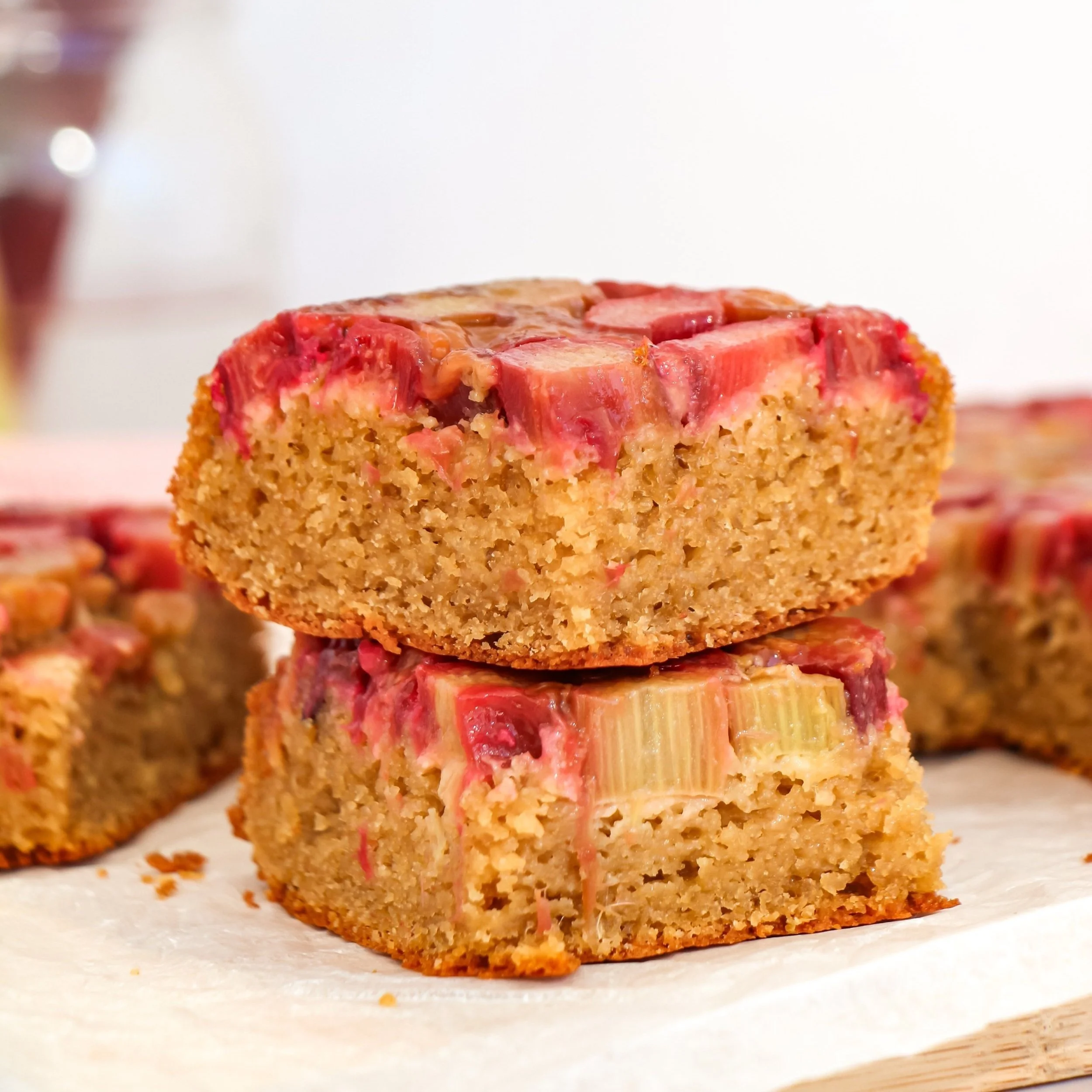
Expert Tips
Pack the rhubarb tightly together to create an even topping and prevent too much cake batter from seeping through.
Use baking paper to make flipping the cake much easier.
Don't skip the resting time before flipping. The cake needs a few minutes to settle so it holds together.
Check the centre before removing the cake from the oven. It should be cooked through, not gooey.
If your baking dish is a different size, keep an eye on the rhubarb coverage and adjust the baking time as needed.
Serve with custard, vanilla yoghurt or a little cream for an extra delicious dessert. A warm square with custard is particularly divine!
Storage
Store in an airtight container in the fridge for up to 5 days.
This cake is delicious chilled or brought back to room temperature before serving. You can also gently warm individual squares and serve them with custard for a cosy dessert.
Although if you're anything like me, I doubt they'll last that long!
Frequently Asked Questions
Is this rhubarb cake gluten-free?
Yes! It's made with almond flour and tapioca flour instead of wheat flour, making it naturally gluten-free.
Is this cake paleo-friendly?
Yes, the recipe uses grain-free flours and can be made with paleo-friendly sweeteners and ingredients. Choose suitable products for your preferred version.
Can I make it dairy-free?
Absolutely. Use coconut oil instead of butter or ghee and choose an unsweetened dairy-free yoghurt.
Can I use regular sugar instead of coconut sugar?
Yes! Granulated sugar works well in both the rhubarb topping and the cake batter.
How do I know when the cake is ready?
The cake should be set and lightly golden, and a knife inserted into the centre should come out clean. If there's wet batter on the knife, bake for a few more minutes.
Can I use frozen rhubarb?
Fresh rhubarb is my preference. If using frozen rhubarb, thaw and drain it well first, as excess moisture may affect the topping and baking time.
Can I make this cake ahead of time?
Yes! Bake it ahead and store it in the fridge. It's lovely served chilled, at room temperature or gently warmed.
